From Infrastructure to Experience: A New Perspective on High-Power Charging
For many companies, high-power charging is still primarily viewed as a technical challenge. The new High Power Charging Park in front of BMW Welt in Munich takes a different approach: Design, user experience and sustainability have been considered from the very beginning.
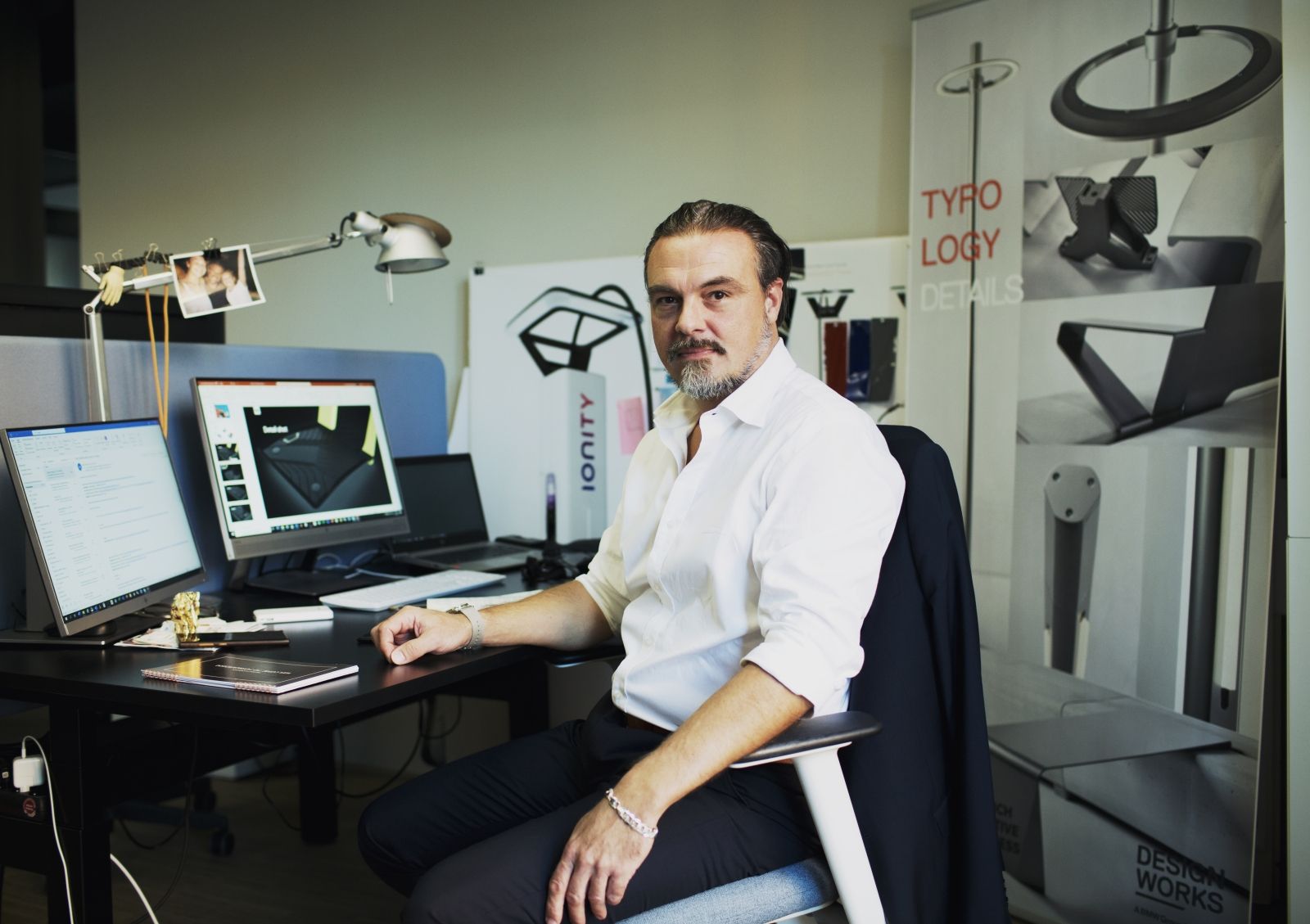
In this interview, Tobias Adami, Creative Director at our Designworks Munich studio, shares the thinking behind the project and what decision-makers in small and medium-sized businesses can take away for their own innovation initiatives.
Before we get into the details of the HPC Park in front of BMW Welt in Munich: How scalable is the concept? Could it be adapted to other locations or even international markets?
Our vision is to transform charging stations into places where people enjoy spending time. This presents a great opportunity to make our urban environments more livable.
The HPC Park in front of BMW Welt deliberately sets itself apart from existing charging concepts. Through scaling and design iterations, the concept can be adapted to a variety of locations and brand environments – whether in national or international contexts.
What was the original vision behind the charging park in front of BMW Welt?
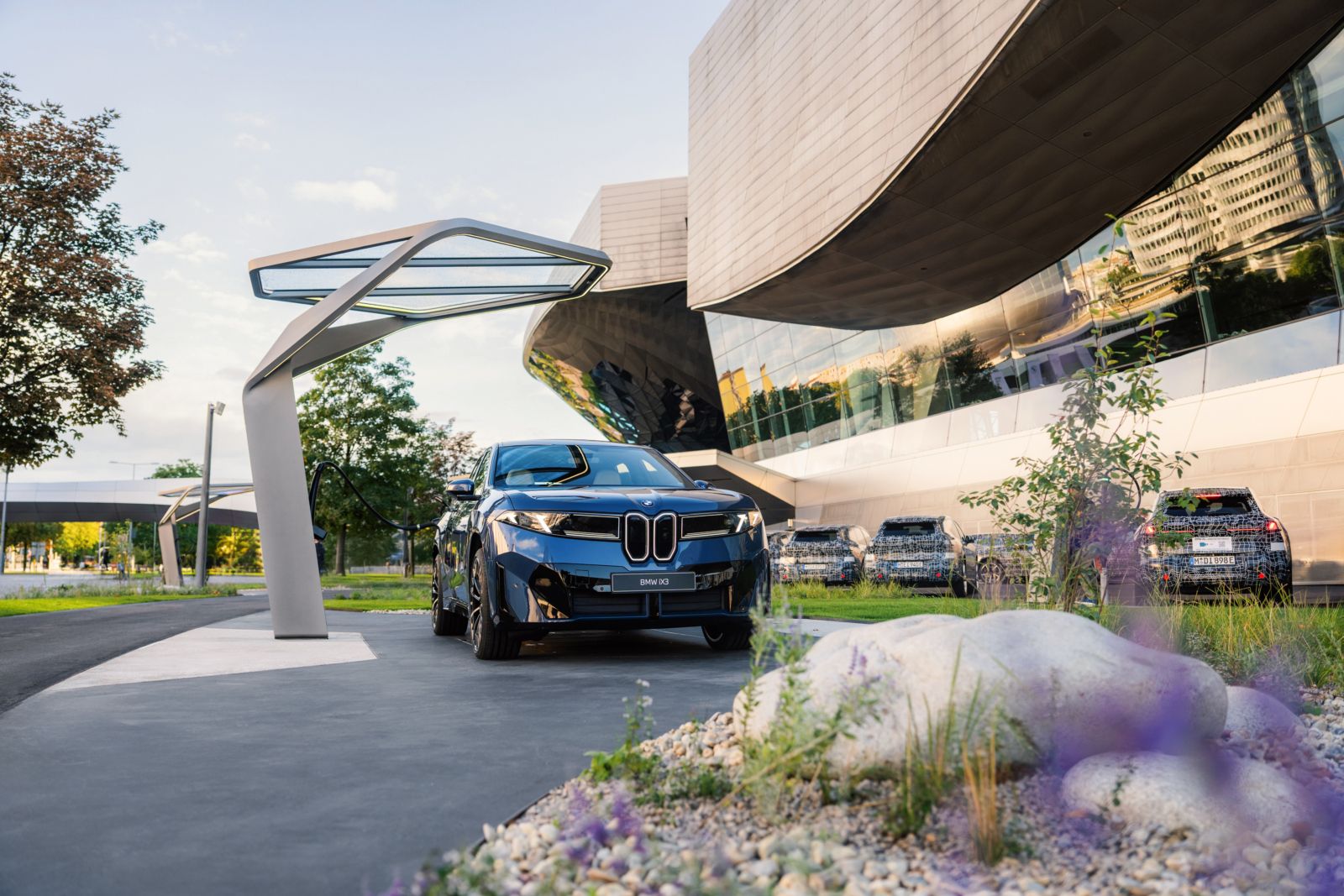
We wanted to design the BMW High Power Charging Park in front of BMW Welt as a place that feels welcoming and inviting. Electric mobility represents an innovative, emission-free alternative to combustion engine technology. The place itself and the charging experience should therefore also feel fundamentally different from a conventional fuel station.
This starts with the park-like landscape we created, into which the charging park seamlessly integrates. An urban oasis that visually reinforces the sustainable character of electric charging.
To create this park-like landscape, we removed previously sealed surfaces, creating new permeable areas that also help reduce the strain on the city’s drainage system. The gravel surfaces and terrazzo elements are made from local materials, using stones sourced from the Isar river.
High-voltage systems and charging processes typically generate significant amounts of heat. We redirected this heat beneath the charging bays, allowing us to make use of the residual energy to keep the surfaces free of snow and ice during the winter months.
What design considerations shaped the distinctive form language of the the so-called “Charging Trees”?
As the name suggests, the Charging Trees are inspired by the shape and character of trees. They create a highly visible landmark – a place that invites people to pause for a moment and recharge, both literally and figuratively.
At the same time, we deliberately moved the charging infrastructure underground. Similar to a tree, the energy flows upwards through the ground and into the structure. However, the Charging Trees do not only establish a semantic connection to nature; they also reflect the design language of BMW and the Neue Klasse.
It was important for us to show that charging points can be more than just electric fuel pumps. In front of BMW Welt, they become part of a place where architecture, technology, and quality of experience come together.
What role does the lighting concept play in shaping the experience during the charging process?
Our goal was to embed the charging process into an orchestrated experience – from entering the charging bay to leaving the charging park. The lighting concept accompanies users throughout the entire process, providing orientation and communicating the current charging status at every moment.
Just as the vehicle and the app communicate the charging process through colors and animations, the charging park adopts the same visual language. The canopy and screen guide users through different lighting scenarios: welcoming them, confirming the successful connection of the charging cable, visualizing the charging progress, and bidding them farewell once the charging process is complete.
This creates a seamless interplay between the vehicle, digital interfaces, and architecture. Every touchpoint provides users with clear and intuitive feedback, creating a sense of orientation and trust.
How does the charging park integrate into the existing surroundings of BMW Welt, both aesthetically and functionally?
The charging park is located along one of Munich’s busiest arterial roads. In contrast to this noisy and traffic-heavy environment, it was important for us to create a space that feels open, light, and connected to nature, while also establishing a link to the surrounding BMW Group buildings.
The charging lane carefully winds its way through the site, which is defined by protected existing trees, and provides five charging bays that can be accessed comfortably and easily by all common vehicle types.
Through the design, including form, materials, and color palette, we intentionally created references to the iconic architecture surrounding the charging park. The nearby Olympic Village and the Olympic grounds, with their distinctive sports venues from 1972, also served as inspiration, particularly in the selection of materials.
What technical challenges had to be overcome to implement charging points with up to 400 kW of power?
There were indeed several challenges. First, we had to integrate eight charging points into a limited space while fully preserving and incorporating the existing trees. At the same time, it was essential to ensure that users could move safely through the charging park. This required close coordination with various authorities regarding regulations, requirements, and approvals.
Added to this was the technical complexity of the site: the U3 underground line runs just a few meters beneath the area. As a result, foundations, technical shafts, as well as energy and communication infrastructure had to be planned and installed with great precision.
All of these requirements called for meticulous planning and close collaboration between all parties involved. Ultimately, the goal was to open the BMW High Power Charging Park on schedule for IAA 2025 and the launch of the Neue Klasse.
What trends do you see shaping the future relationship between design and charging infrastructure?
We see a clear trend: charging infrastructure is evolving from a purely functional space into a holistically designed mobility experience. Architecture, landscape, digital interaction, and brand identity will increasingly be considered as one integrated concept in the future.
Our ambition was to make this transformation visible today. The BMW High Power Charging Park combines sustainable architecture, intuitive user guidance, and digital experiences into a holistic concept that reimagines the charging process.

Find out more!
If you’d like to learn more about these projects and how we at Designworks are shaping the future of e-mobility, feel free to reach out via email to John.C.Schoenbeck@bmwgroupdesignworks.com or contact us through our website.